Roman–Persian wars
Seven centuries of inconclusive Roman–Persian conflict.

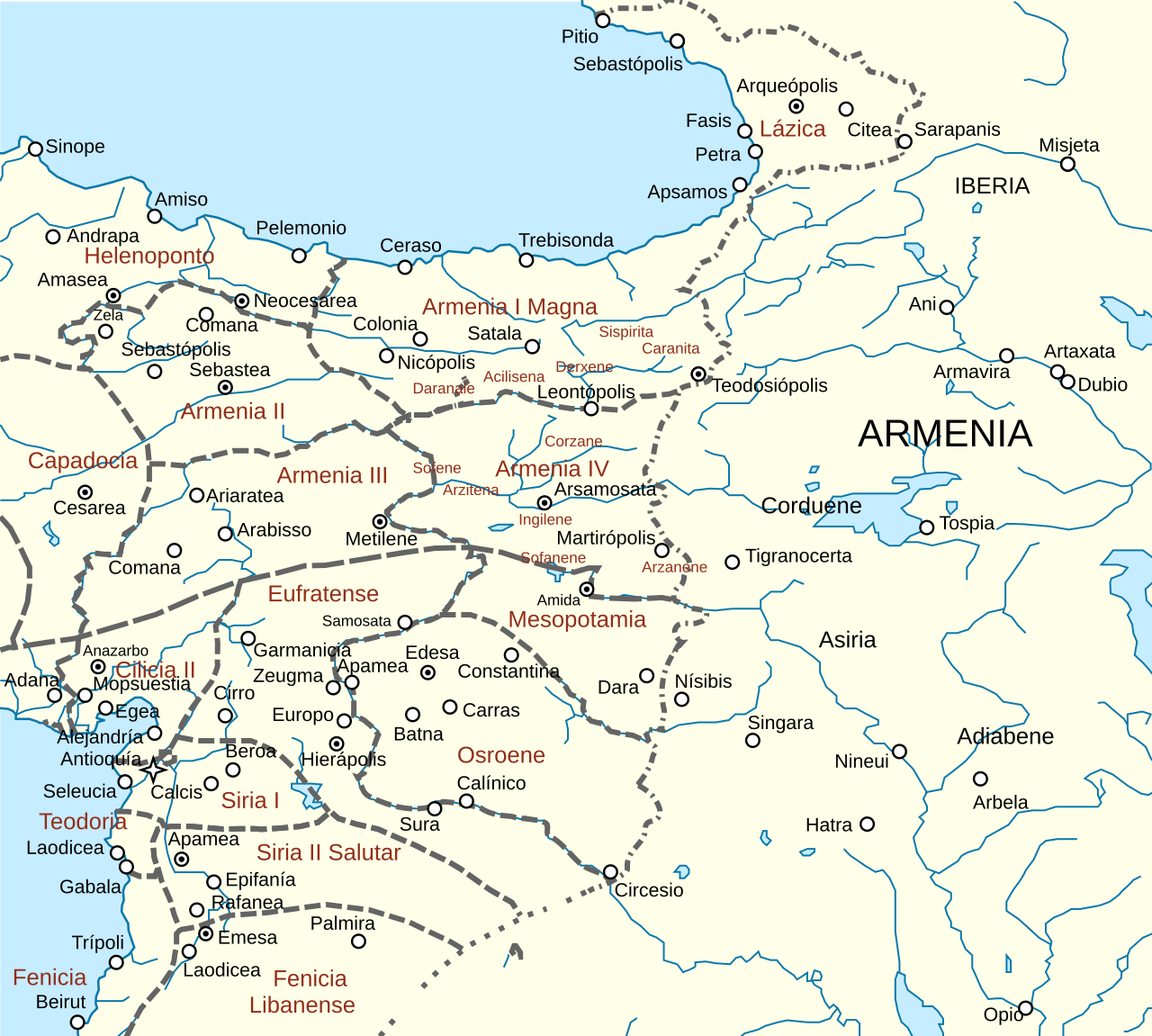
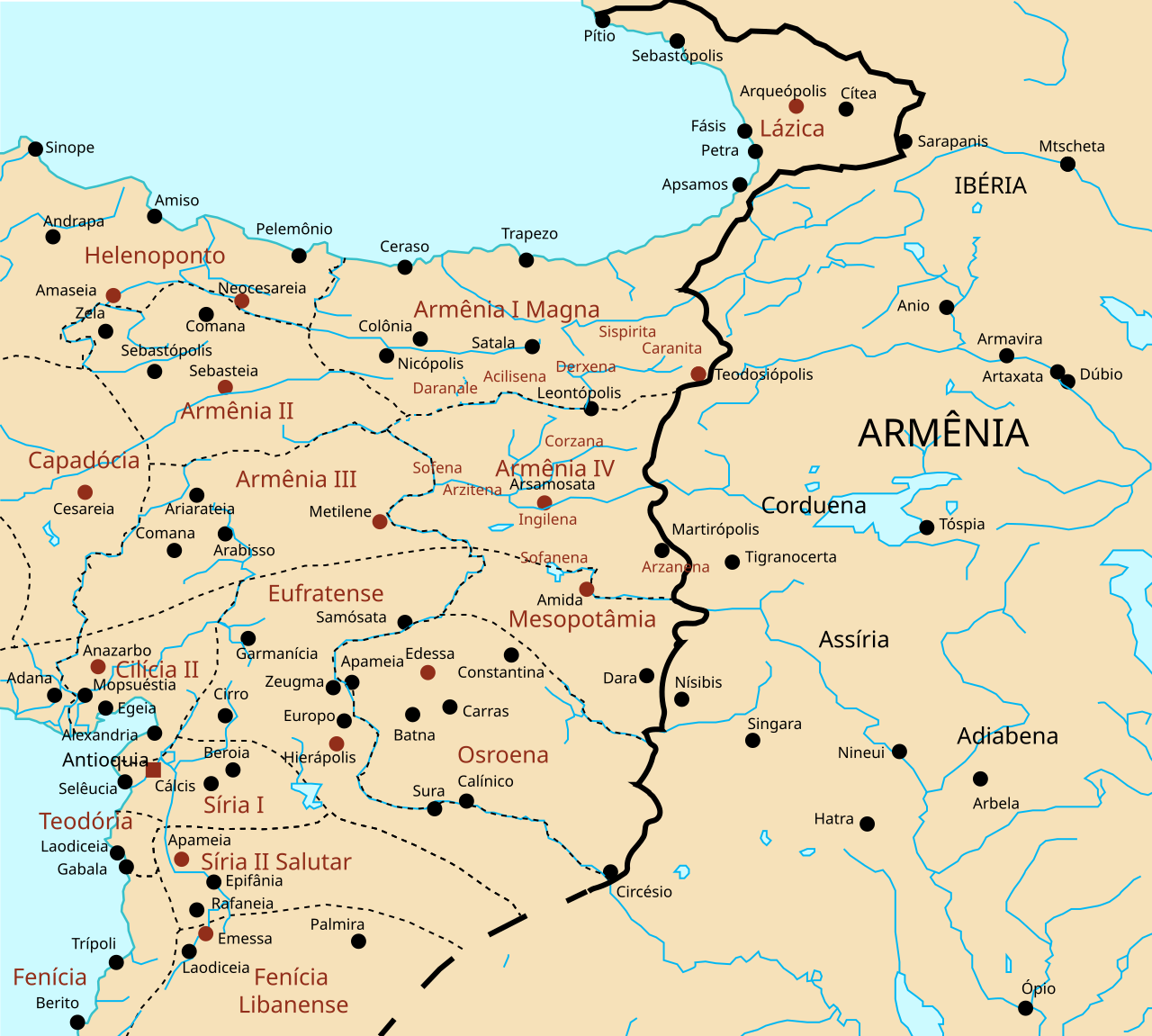
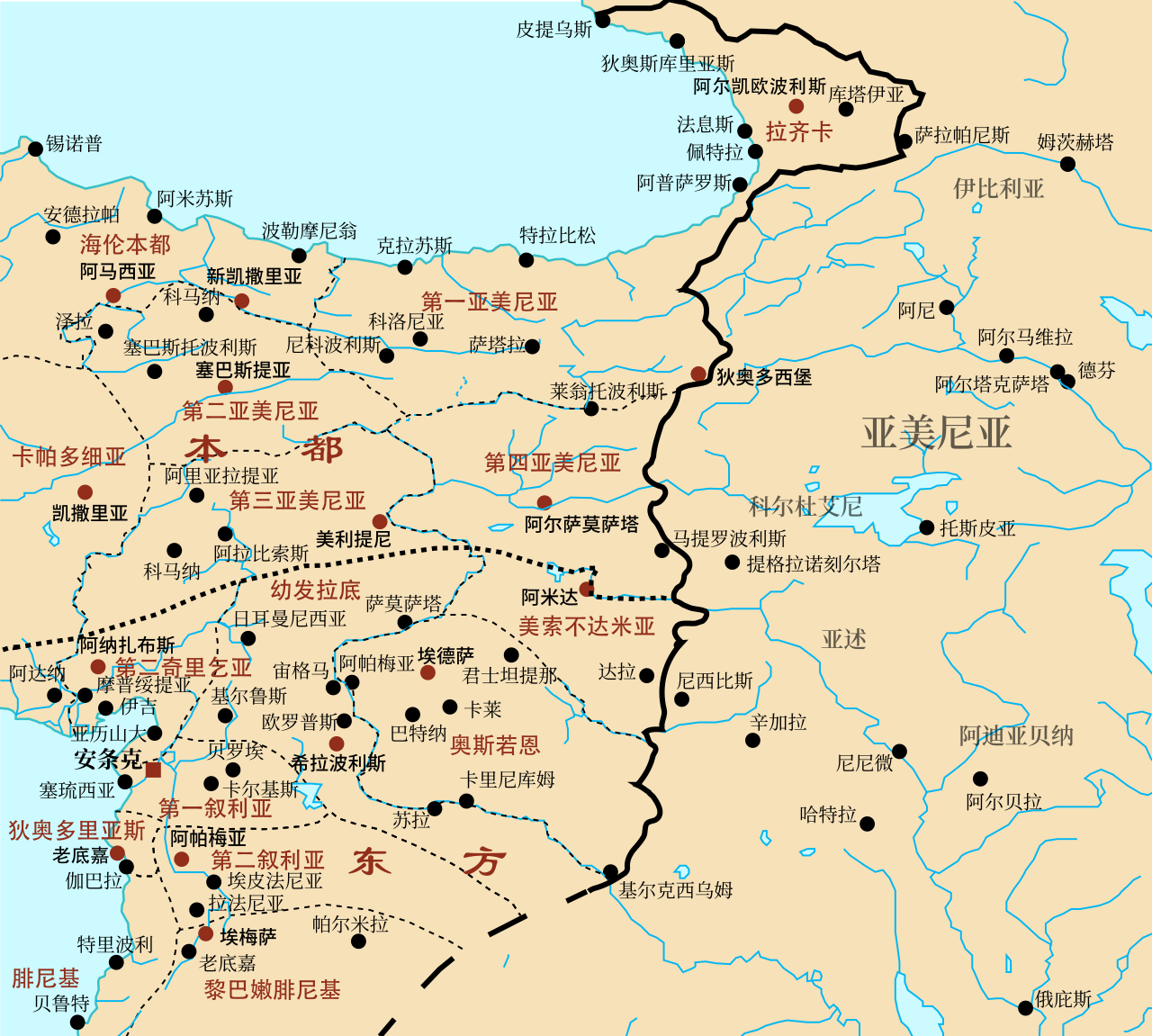
Roman-Persian Frontier, 565 AD-pt.svg : Renato de carvalho ferreira ( talk · con · CC0
They began between the Roman Republic and the Parthian Empire and ended between the Byzantine and Sasanian empires. The wars involved direct military engagements as well as vassal kingdoms and allied nomadic tribes that served as buffer states or proxies. Despite nearly seven centuries of hostility, the outcome was inconclusive, as both empires were later attacked by the Rashidun Caliphate during the early Muslim conquests, leading to the collapse of the Sasanian Empire and the confinement of the Byzantine Empire to Anatolia and southeastern Europe.
- Combatants
- Roman Republic/Empire/Byzantine Empire vs. Parthian/Sasanian Empire
- Key Battle
- Battle of Carrhae (53 BC)
- Outcome
- Inconclusive; both empires weakened and conquered by Rashidun Caliphate
- Significant Figure
- Marcus Licinius Crassus
Lore & Background
The Roman–Persian wars began when the Roman Republic and the Parthian Empire came into contact through their respective conquests of parts of the Seleucid Empire. The Parthians, ruled by the Arsacid dynasty, had expanded into Persia, Mesopotamia, and Armenia by the early 1st century BC. The Romans, after expelling the Seleucids from Anatolia, advanced their eastern frontier to the Euphrates by 64 BC. The first major clash occurred in 53 BC when the Roman general Marcus Licinius Crassus invaded Mesopotamia and was defeated at the Battle of Carrhae, the worst Roman defeat since the battle of Arausio. The Parthians raided Syria in subsequent years but were driven back.
Reader's Guide
The Roman–Persian wars were significant for their duration and impact on both empires. The border remained largely stable despite continual sacking and capture of towns and provinces, as neither side had the logistical strength to maintain lengthy campaigns far from their borders. Both sides gradually adopted military tactics from each other, becoming similar and evenly matched by the second half of the 6th century. Ultimately, the prolonged warfare of the 6th and 7th centuries left both empires militarily exhausted and vulnerable. The Rashidun Caliphate, benefiting from their weakened conditions, swiftly conquered Persia and Byzantine territories including the Levant, Caucasus, Egypt, and North Africa, leading to the collapse of the Sasanian Empire and the onset of the Arab–Byzantine wars.
Did You Know?
- The Battle of Carrhae in 53 BC was the worst Roman defeat since the battle of Arausio.
- Both sides gradually adopted military tactics from each other and were evenly matched by the second half of the 6th century.
- The Rashidun Caliphate's offensives resulted in the collapse of the Sasanian Empire and confined the Byzantine Empire to Anatolia and southeastern Europe.
Seven Centuries of Rivalry: Scope and Succession
What began as a clash between the Roman Republic and the Parthian Empire evolved, through dynastic and political transformations, into a struggle between the Byzantine and Sasanian empires. The Parthians, originally a Central Asian steppe people who migrated into northern Iran during the third century BC, had broken free from Seleucid overlordship by the second century BC and expanded across Persia, Mesopotamia, and Armenia under the Arsacid dynasty. The Romans, meanwhile, had pushed their eastern frontier to the Euphrates after Pompey's conquest of Syria in 64 BC, placing the two powers in direct geographic opposition. Despite the extraordinary duration of this rivalry, its ultimate outcome was entirely inconclusive: neither civilization emerged as a decisive victor, and both were ultimately shattered by a third force — the Rashidun Caliphate — during the early Muslim conquests.
The Buffer State Chessboard: Proxies and Vassals
A defining feature of the Roman–Persian wars was that direct state-on-state combat was only one dimension of a far more complex geopolitical ecosystem. Vassal kingdoms and allied nomadic tribes served as buffer states and proxies for both sides, creating layers of indirect conflict that often determined the strategic balance more than any single pitched battle. The Arsacid dynasty, for instance, established eponymous ruling branches across the Caucasus — in Armenia, Iberia, and Caucasian Albania — which became perpetual flashpoints. The western district of Osroene functioned as a Roman dependency within the broader Parthian sphere of Mesopotamia. During the Roman civil wars, Parthian forces intervened on behalf of Pompeian and Liberators' factions, and later supported Quintus Labienus in a devastating incursion into Syria and Judea in 40 BC, briefly threatening the entire Roman East. These proxy engagements and vassal alliances meant that the conflict rarely stayed contained within the borders of the two great empires, instead rippling outward through a web of smaller polities whose loyalties shifted with each diplomatic turn.
The Eternal Tug-of-War: A Border That Never Moved
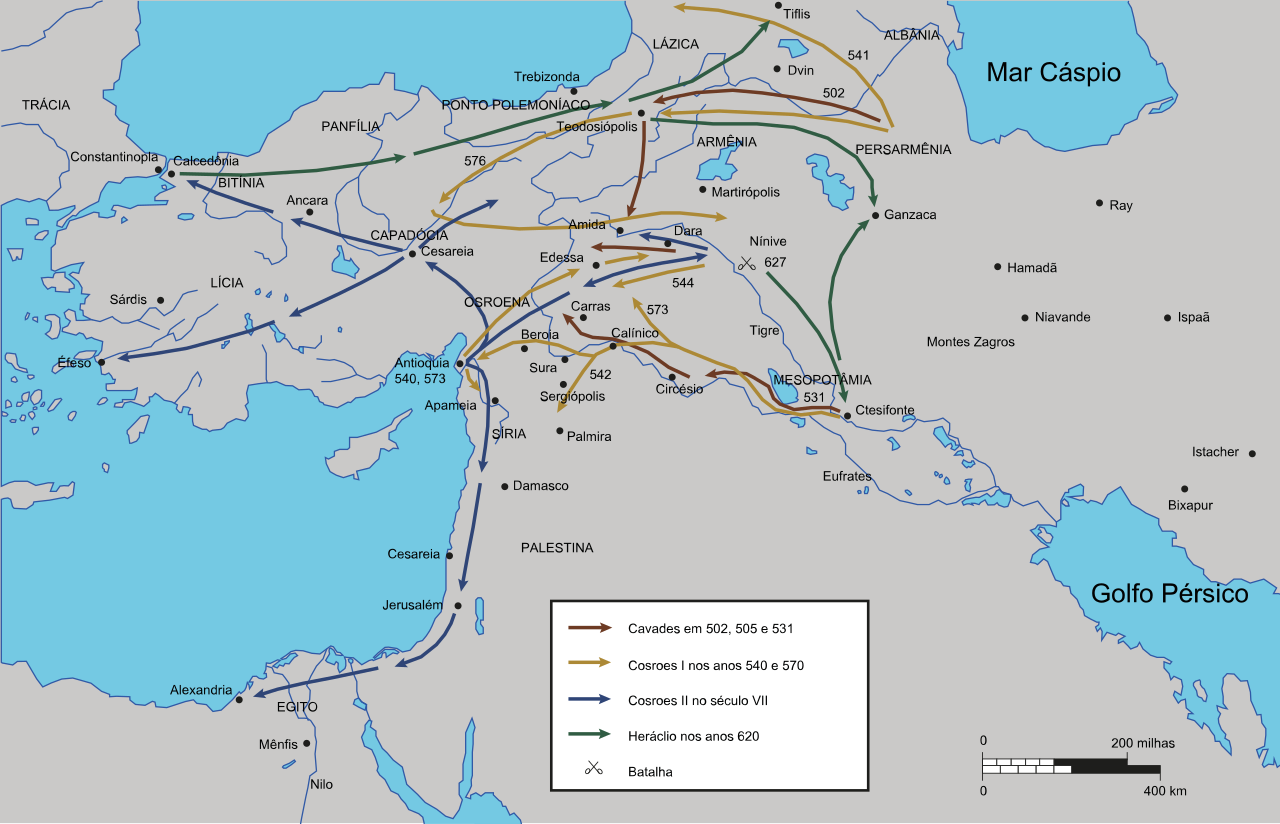
Despite nearly seven centuries of warfare, the Roman–Persian border remained remarkably stable in its broad geographic position. The conflict played out as an effective tug of war: towns, fortifications, and provinces were repeatedly sacked, captured, destroyed, and traded between the two powers, yet neither side possessed the logistical depth or manpower to sustain prolonged campaigns far from home. Any advance beyond the frontier risked stretching supply lines and exposing the homeland to counterattack, so conquests beyond the border were almost always temporary, and the balance was restored in time. This structural limitation meant that the wars, for all their intensity, never produced a decisive territorial settlement. Over the centuries, the two militaries also converged in doctrine. Initially different in their tactical approaches, Romans and Persians gradually adopted elements of each other's warfare, and by the second half of the sixth century they had become similar and evenly matched, further entrenching the stalemate that characterized the rivalry.
Exhaustion and the Arab Storm: The Inconclusive End
The ultimate consequence of the Roman–Persian wars was not a victor but mutual ruin. The prolonged and escalating warfare of the sixth and seventh centuries drained both empires of military resources, leaving them exhausted and vulnerable at precisely the moment a new power emerged. The Rashidun Caliphate, benefiting from the weakened condition of both the Sasanians and the Byzantines, launched swift and devastating offensives on two fronts simultaneously. On the Sasanian side, the Rashidun armies conquered Persia, bringing the Sasanian Empire to its collapse. On the Byzantine front, the Caliphate seized the Levant, the Caucasus, Egypt, and the remainder of North Africa, largely confining the Byzantine Empire to Anatolia and southeastern Europe. This dramatic reversal meant that the nearly seven-century rivalry between Rome and Persia ended not with one side's triumph over the other, but with both being swept aside by a third force. The ensuing Arab–Byzantine wars would define the geopolitical landscape for centuries, but the old Roman–Persian axis was permanently extinguished.
Gallery
More in Wars & Conflicts 1-20
Spotted an error? Know more?
This is a living reference — every entry is fact-audited, and reader corrections feed straight into our audit queue. Suggest an edit · See this site's audit record