Punic Wars
Three wars that ended Carthage and made Rome supreme.

User:AlexiusHoratius, User:Rowanwindwhistler · CC BY 3.0
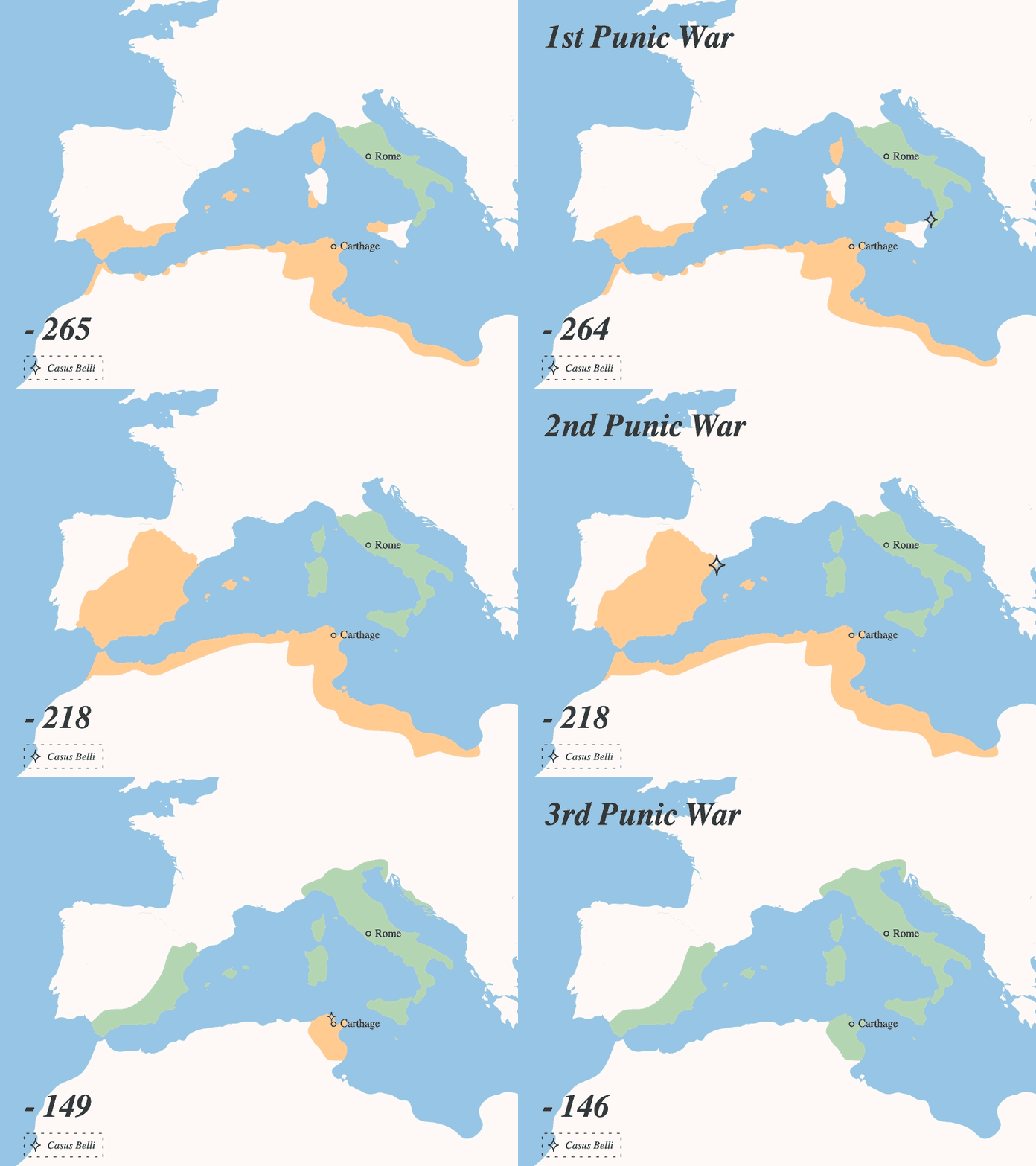
They involved forty-three years of warfare across the western Mediterranean, including a four-year revolt against Carthage. These conflicts resulted in the destruction of Carthage and the establishment of Rome as the dominant power in the region.
- Number of Wars
- 3
- Total Years of Warfare
- 43
- Major Combatants
- Roman Republic, Carthaginian Empire
- Key Regions
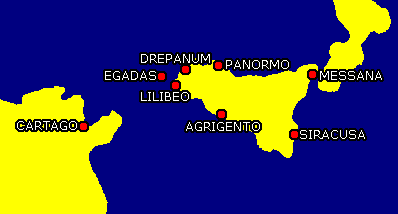
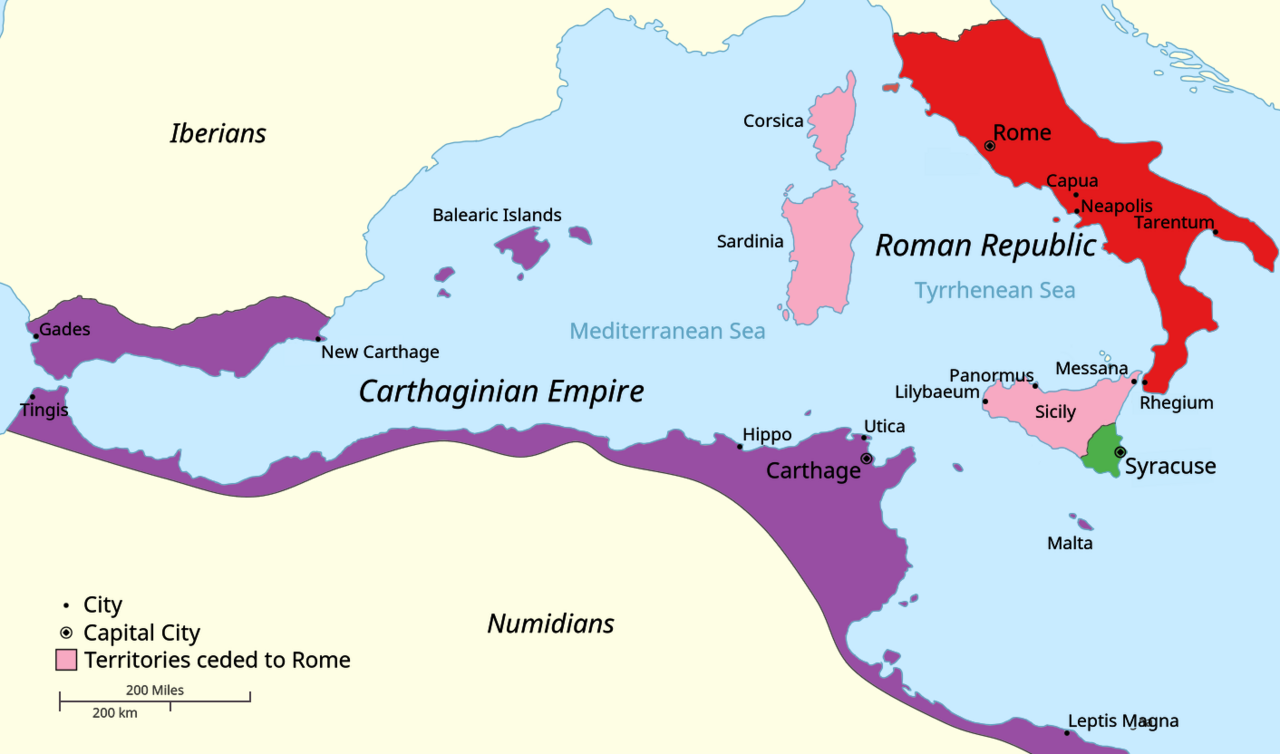
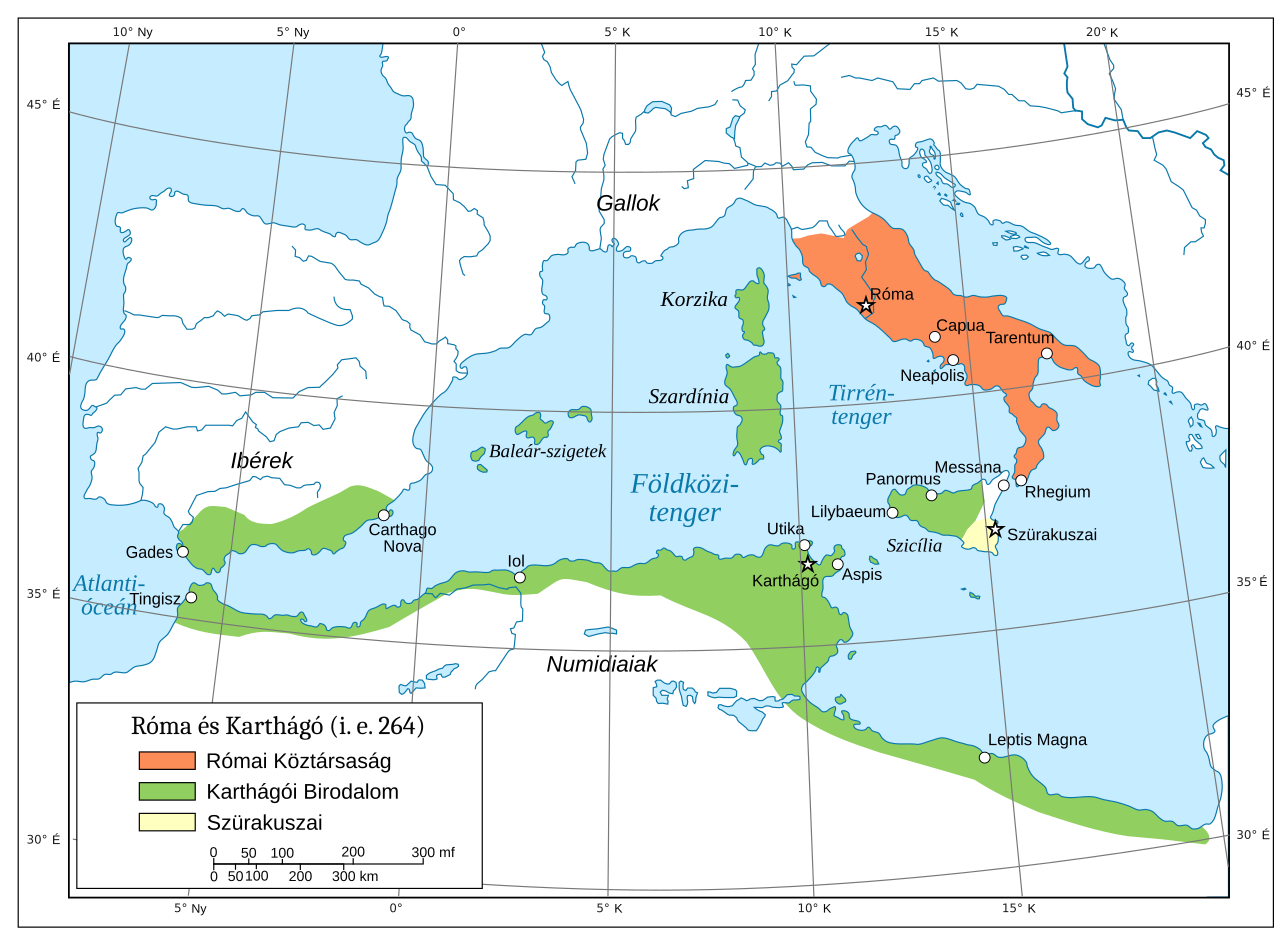
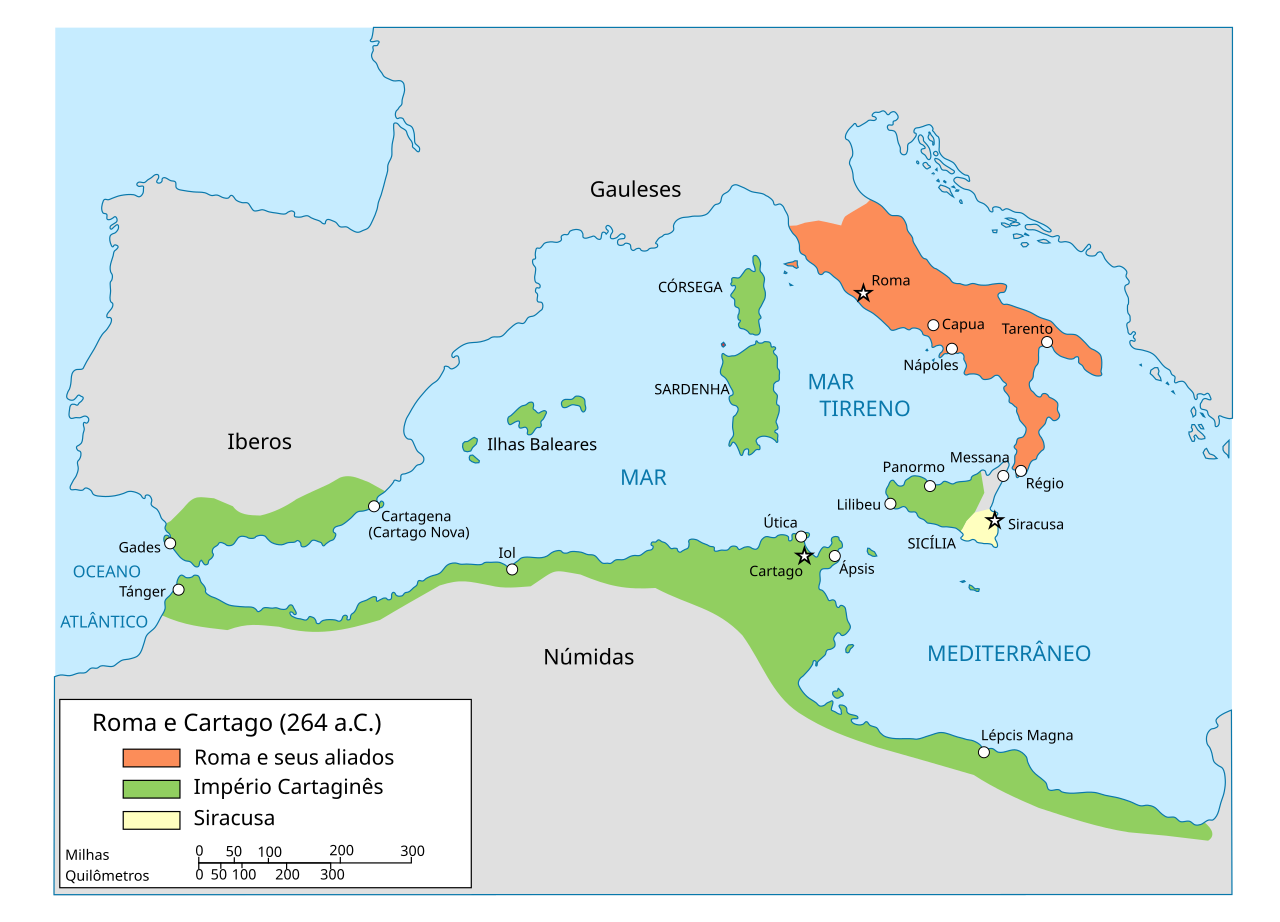
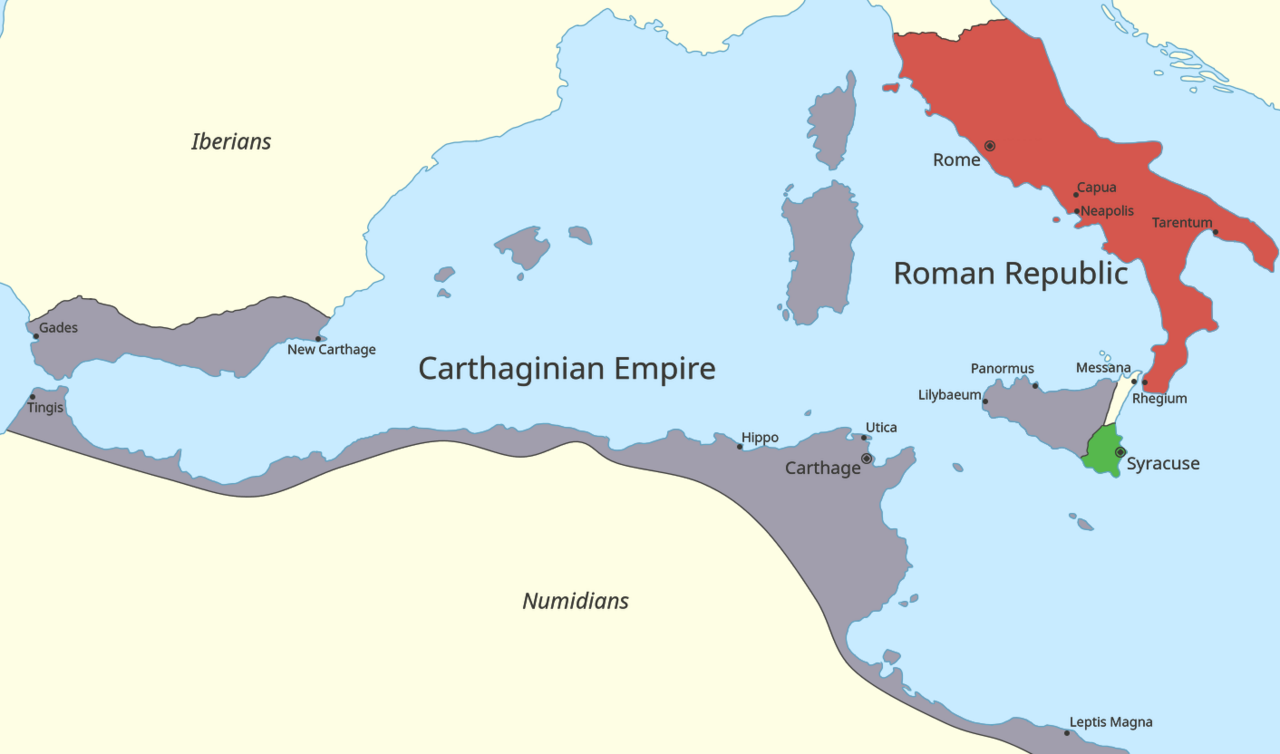
- Sicily, North Africa, Iberia, Italy, Sardinia, Corsica
- Outcome
- Roman victory; Carthage destroyed
Lore & Background
Carthage was then the dominant western Mediterranean power with a large navy, while Rome had a strong army but no navy. The war's end sparked the Mercenary War, an unsuccessful Carthaginian revolt. He campaigned there for fourteen years with early success. Fighting also occurred in Iberia, Sicily, Sardinia, and North Africa. The 201 BC treaty stripped Carthage of overseas territories, imposed a large indemnity, and severely restricted its military, ending its threat to Rome. The war was fought entirely in Carthaginian territory (modern Tunisia), centered on the siege of Carthage. Carthage's territories became the Roman province of Africa.
Reader's Guide
The Punic Wars were pivotal in shaping the ancient Mediterranean world. They marked the transition of Rome from a regional Italian power to the dominant force in the western Mediterranean, while Carthage was completely destroyed. The wars established Rome's first overseas province (Sicily) and set a pattern of aggressive expansion. The conflict also produced famous figures like Hannibal, whose Alpine crossing remains legendary. The wars' legacy includes the complete annihilation of a rival state, a rare event in antiquity, and the solidification of Roman military and political institutions. The historian Polybius, a Greek hostage who accompanied the Roman general Scipio Aemilianus during the Third Punic War, provides the most reliable account, though his pro-Roman bias is noted. Modern understanding relies heavily on Polybius, supplemented by Livy and other later sources, with no Carthaginian primary accounts surviving. The wars' outcome directly led to Rome's hegemony over the Mediterranean for centuries.
Did You Know?
- Hannibal's invasion of Italy during the Second Punic War lasted fourteen years before the survivors withdrew.
- The Third Punic War was fought entirely in Carthaginian territory, now Tunisia.
- The most reliable source for the Punic Wars is the historian Polybius, a Greek hostage who was present during the Third Punic War.
Gallery
More in Wars & Conflicts 1-20
Spotted an error? Know more?
This is a living reference — every entry is fact-audited, and reader corrections feed straight into our audit queue. Suggest an edit · See this site's audit record