Paraguayan War
Deadliest inter-state war in Latin American history.

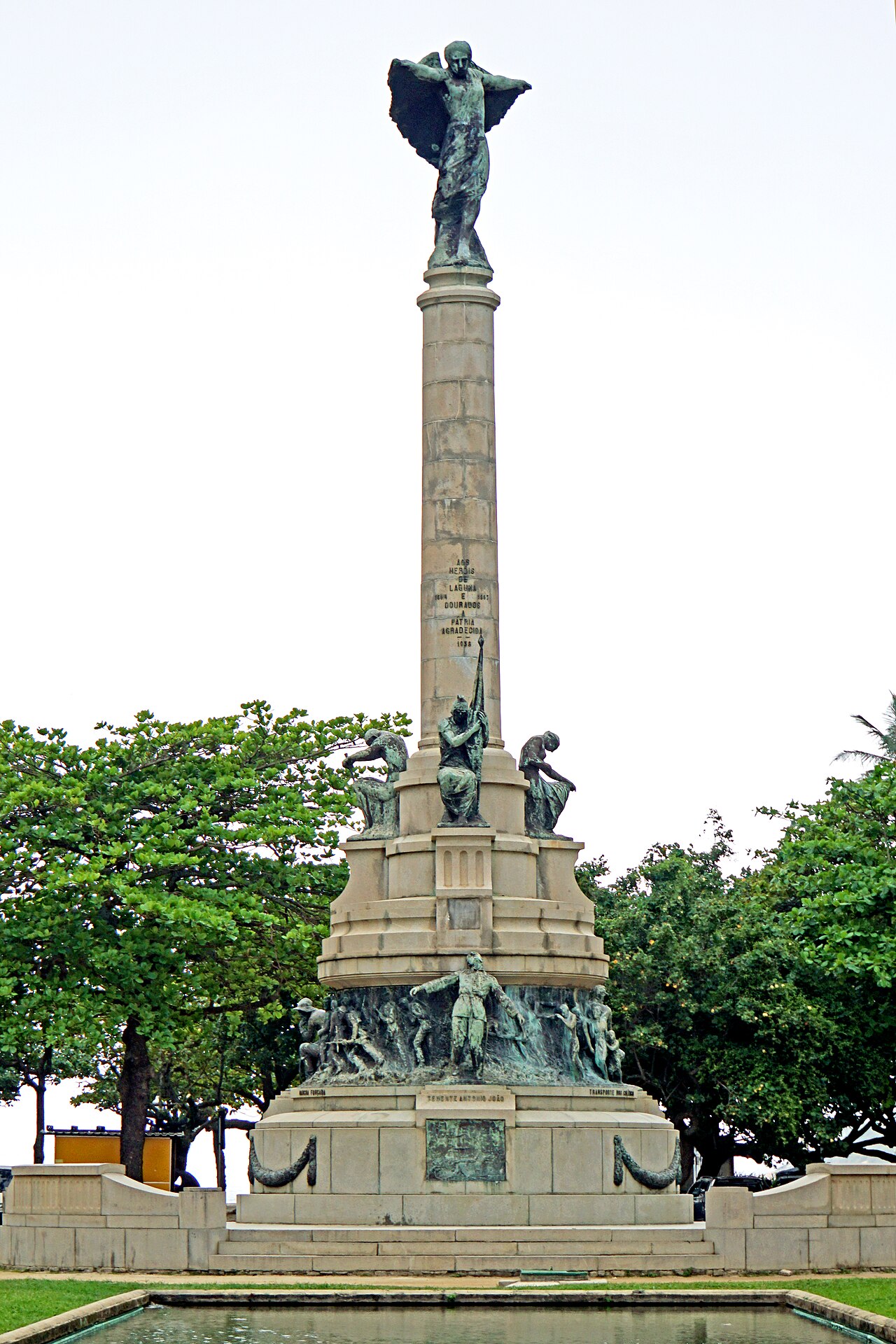
Dennis G. Jarvis · CC BY-SA 2.0
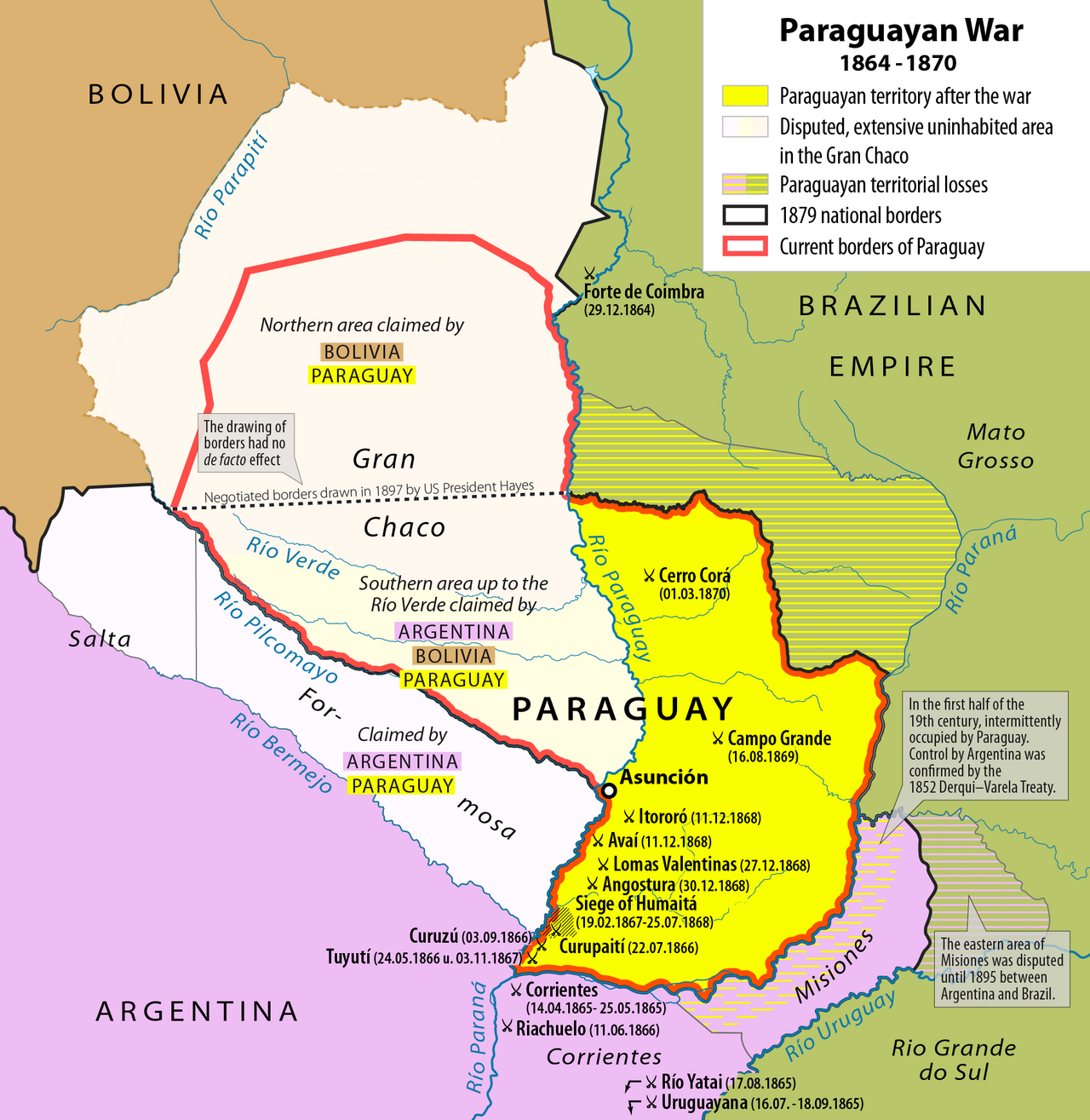
It was fought between Paraguay and the Triple Alliance of Argentina, the Empire of Brazil, and Uruguay, and is considered the deadliest inter-state war in Latin American history. Paraguay sustained immense casualties, though even approximate numbers are disputed, and was forced to cede disputed territory to Argentina and Brazil.
- location
- South America
- belligerents
- Paraguay vs. Triple Alliance (Argentina, Brazil, Uruguay)
- result
- Paraguayan defeat; territory ceded to Argentina and Brazil
Lore & Background
After Paraguay was defeated in conventional warfare, it conducted a drawn-out guerrilla resistance, which resulted in further destruction of the Paraguayan military and civilian population. Much of the civilian population died due to battle, hunger, and disease.
Reader's Guide
The Paraguayan War stands as a pivotal event in South American history, reshaping borders and power dynamics in the Río de la Plata region. Its origins lie in territorial disputes stemming from colonial treaties, such as the Treaty of Tordesillas and the Treaty of Madrid, and in the political rivalries between Brazil, Argentina, and Paraguay. The war's immense human cost—though disputed in exact numbers—devastated Paraguay's population and military. The conflict also highlighted the instability of post-colonial boundaries and the hegemonic ambitions of Brazil and Argentina. The guerrilla phase after conventional defeat prolonged suffering and ended only with López's death. The war's legacy includes ongoing debates over its causes, from López's expansionist ambitions to the meddling of regional powers in Uruguay.
Did You Know?
- The war is also known as the War of the Triple Alliance.
- Paraguay sustained immense casualties, but even the approximate numbers are disputed.
Colonial Inheritance and the Chaos of New Borders
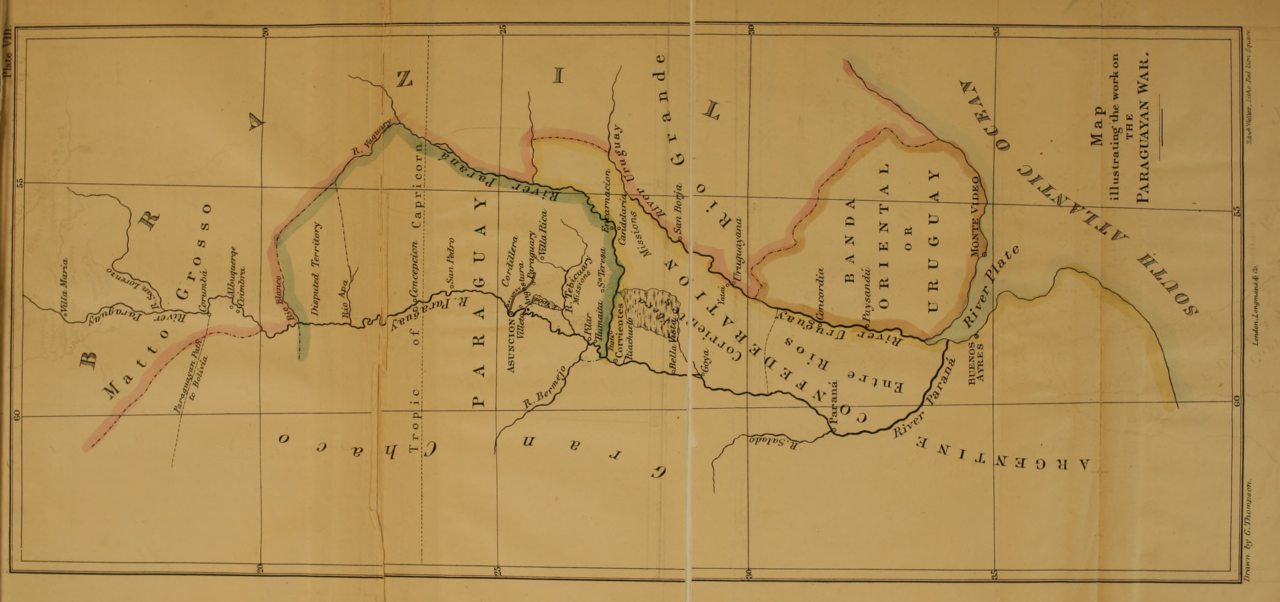
Since the early nineteenth century, the nations that emerged from the collapse of Spanish and Portuguese colonial rule in South America inherited a tangled web of unresolved boundary questions. When the Viceroyalty of the Río de la Plata shattered in the 1810s, the newly independent states of Argentina, Paraguay, Bolivia, and Uruguay found themselves quarreling over tracts of land that were largely uncharted, sparsely settled, or inhabited by indigenous peoples who answered to no government. For Paraguay and Brazil, the central question was whether the Apa or the Branco River should mark their shared frontier—a dispute that had already confused Madrid and Lisbon in the late eighteenth century and that would fester for decades.
Hegemony, Intervention, and the Uruguayan Flashpoint
For decades after independence, Brazil and Argentina vied for dominance over the Río de la Plata basin, a rivalry that shaped every diplomatic relationship in the region. During the era of Juan Manuel Rosas in Buenos Aires, Brazil and Paraguay shared a common adversary, and Brazilian officials even helped strengthen Asunción's fortifications. Yet Paraguay's geographic position made it perpetually vulnerable: Brazilian ships depended on the Paraguay River to reach the inland province of Mato Grosso, and Asunción could grant or deny that access. Paraguay, aware that its larger neighbors harbored territorial claims and political ambitions, built a formidable military under Carlos Antonio López, whose years in office were marked by recurring boundary and tariff friction with both Argentina and Brazil. The powder keg finally ignited through Uruguay.
From Conventional Defeat to Guerrilla Desperation
For the first several years, Paraguay fought a conventional war against a coalition of three nations, but once its regular forces were broken, the country shifted to a drawn-out guerrilla resistance. That desperate strategy, while extending the conflict, proved equally devastating to Paraguay's own people: the prolonged irregular warfare accelerated the destruction of both the military structure and the civilian population. The guerrilla phase stretched for fourteen agonizing months before it ended with the death of President Francisco Solano López himself.
A Nation Devastated: The Human and Territorial Toll
The Paraguayan War stands as the deadliest inter-state conflict in the history of Latin America, a distinction that speaks to the sheer scale of suffering endured by the small republic. Paraguay absorbed catastrophic losses, yet even the approximate casualty figures remain disputed among historians, a testament to how completely the war obliterated records and communities. The civilian population bore a burden as heavy as that of the soldiers: people perished not only on the battlefield but from hunger and disease that swept through a country whose infrastructure had been systematically dismantled. The guerrilla phase, far from being a purely military affair, deepened the humanitarian catastrophe by further destroying the civilian base that had already been ravaged by conventional combat. In the aftermath, the defeated nation was compelled to cede disputed territories to both Argentina and Brazil, a territorial concession that compounded the human devastation with a permanent loss of land. The war left Paraguay not merely weakened but fundamentally reshaped—its borders redrawn, its population decimated, and its sovereignty tested to the breaking point by the combined weight of three neighboring states.
Gallery
More in Wars & Conflicts 1-20
Spotted an error? Know more?
This is a living reference — every entry is fact-audited, and reader corrections feed straight into our audit queue. Suggest an edit · See this site's audit record