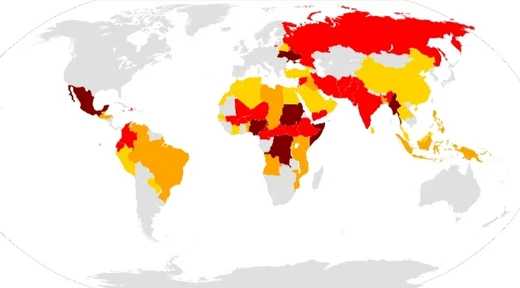
Nigerian Civil War

Clyde H. Mapping · CC BY-SA 4.0
- belligerents
- Nigeria vs. Republic of Biafra
- key_leaders
- General Yakubu Gowon (Nigeria), Lieutenant Colonel Chukwuemeka Odumegwu Ojukwu (Biafra)
Lore & Background
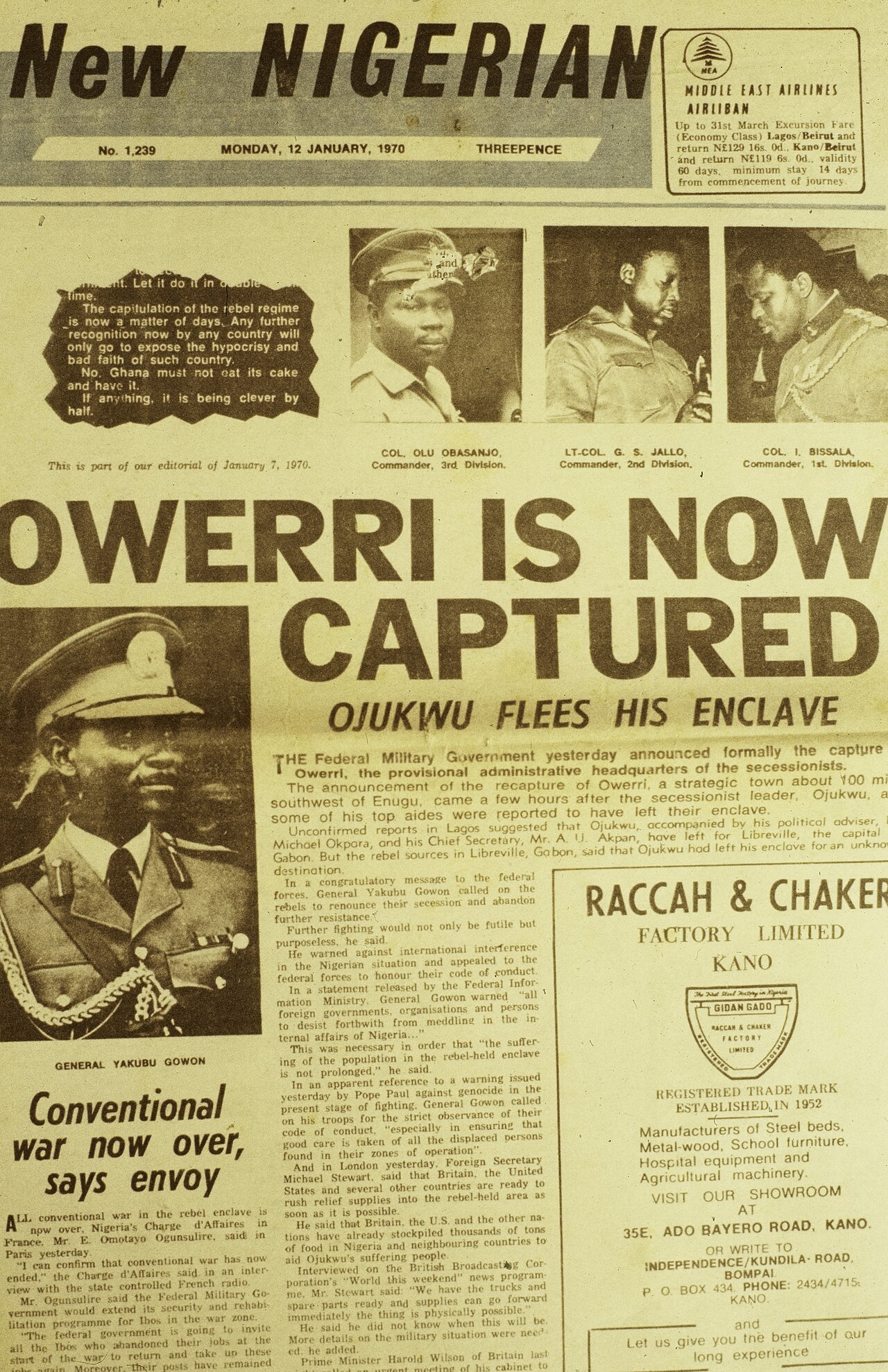
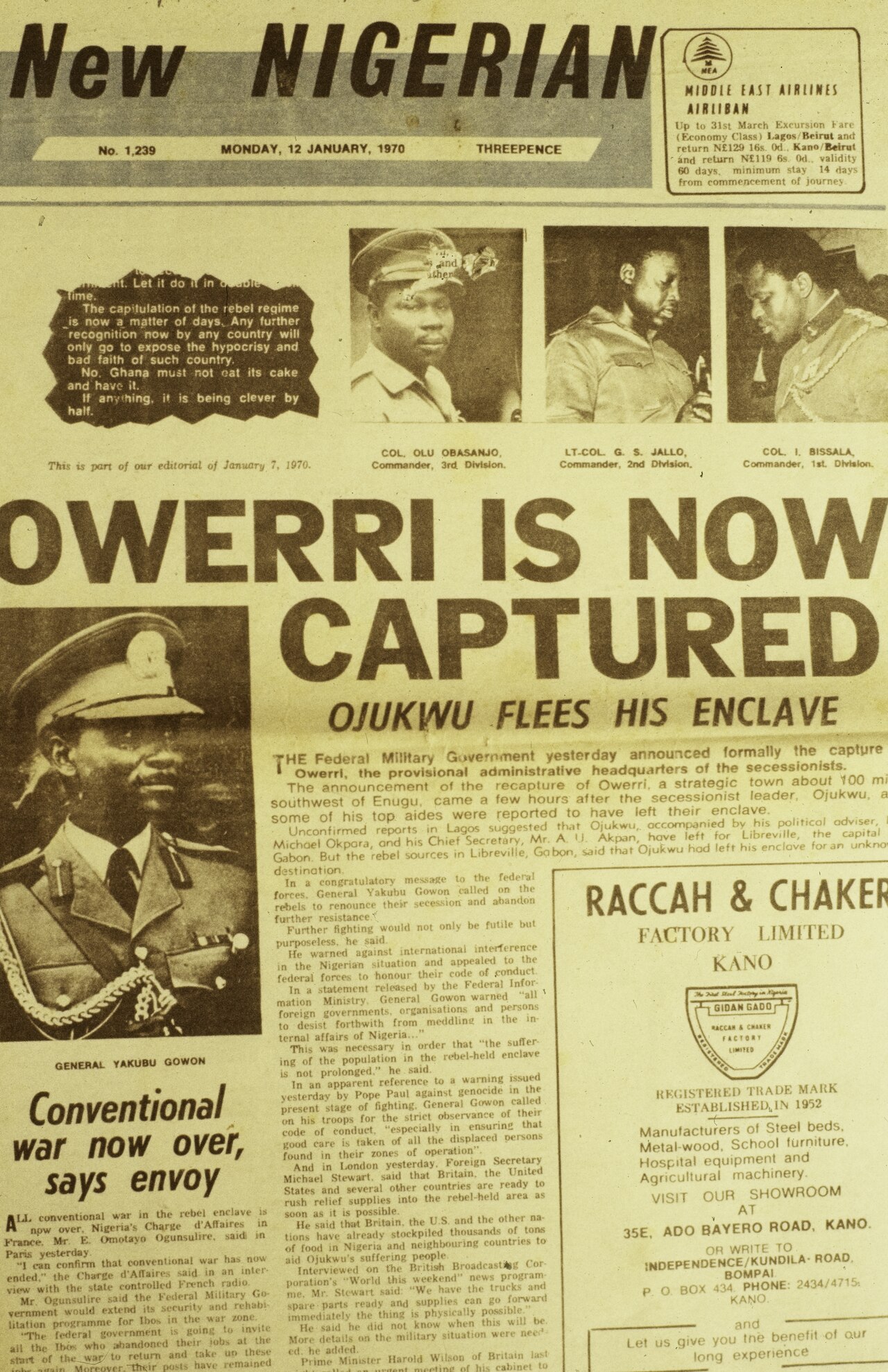
The Nigerian Civil War was fought between Nigeria, led by General Yakubu Gowon, and the Republic of Biafra, led by Lieutenant Colonel Chukwuemeka 'Emeka' Odumegwu Ojukwu. The leadership of the Eastern Region concluded that the Nigerian federal government was unwilling or unable to guarantee protection for Igbos, leading to the establishment of Biafra as a sovereign state. Within a year, Nigerian troops surrounded Biafra, capturing coastal oil facilities and Port Harcourt, and imposed a blockade that caused mass starvation of Biafran civilians.
Reader's Guide
The Nigerian Civil War was one of the first wars in human history to be televised globally, alongside the concurrent Vietnam War. The Biafran airlift inspired the formation of Doctors Without Borders after the war. The United Kingdom and Soviet Union supported Nigeria, while France, Ivory Coast, and Gabon supported Biafra; the United States maintained neutrality. The war highlighted challenges within pan-Africanism and shortcomings of the Organization of African Unity. It resulted in political marginalization of the Igbo people, with no Igbo president since the war, and spurred Igbo nationalism and neo-Biafran secessionist groups such as the Indigenous People of Biafra and Movement for the Actualization of the Sovereign State of Biafra.
Did You Know?
- The Biafran airlift inspired the formation of Doctors Without Borders after the war.
- The United Kingdom and the Soviet Union were the main supporters of the Nigerian government.
Roots in Colonial Amalgamation and the Road to Secession
The three dominant groups—the Igbo concentrated in the southeast, the Hausa-Fulani in the north, and the Yoruba in the southwest—had long competed for political and economic influence.
The Siege, the Blockade, and a Devastating Human Toll
Within roughly a year of the war's outbreak, Nigerian government forces had encircled the bulk of Biafran territory, seizing key coastal oil installations and the strategic port city of Port Harcourt. What followed was a deliberate blockade imposed by the federal military during the ensuing stalemate—a policy that proved catastrophic for the civilian population trapped inside. The far greater tragedy, however, was the mass starvation that engulfed Biafran civilians as the blockade strangled food supplies. General Yakubu Gowon, who served as Nigeria's head of state throughout the conflict, oversaw the federal military campaign, while Lieutenant Colonel Chukwuemeka Odumegwu Ojukwu led the secessionist state from its inception. The war's human cost—measured not in battlefield victories but in the slow, agonizing deaths of civilians—remains one of the most harrowing chapters in twentieth-century African history.
A War Broadcast to the World and the Birth of Modern Humanitarianism
Alongside the Vietnam War, the Nigerian Civil War stands as one of the first conflicts in human history to be broadcast live to a global television audience. This unprecedented media exposure catalyzed a dramatic surge in both the funding and the public prominence of international non-governmental organizations. Civilians around the world organized the Biafran airlift, a remarkable humanitarian operation that delivered desperately needed aid to the blockaded territory. The moral urgency of that crisis directly inspired the founding of Doctors Without Borders in the war's aftermath. On the diplomatic front, the conflict drew sharp international alignments: the United Kingdom and the Soviet Union backed the Nigerian federal government, while France, Ivory Coast, and Gabon extended support to Biafra. The United States maintained an official stance of neutrality, framing Nigeria as essentially "a responsibility of Britain," though its refusal to recognize Biafran sovereignty was widely read as a quiet tilt toward Abuja.
Unhealed Wounds: Pan-Africanism, Marginalization, and the Persistence of Biafran Identity
The Nigerian Civil War exposed deep fractures within the broader project of pan-Africanism during the fragile early years of post-colonial independence. The conflict suggested that the extraordinary ethnic and cultural diversity of the African continent could itself become an obstacle to the shared unity that liberation movements had envisioned. It also laid bare the initial institutional shortcomings of the Organization of African Unity, which struggled to mediate or prevent the crisis. This sense of grievance has given rise to a robust Igbo nationalism and to a constellation of neo-Biafran secessionist movements, including the Indigenous People of Biafra and the Movement for the Actualization of the Sovereign State of Biafra. The war, in this reading, never truly ended—it merely shifted from the battlefield to the political and cultural landscape of a nation still grappling with the question of who belongs and who is left behind.
Gallery
More in Wars & Conflicts 1-20
Spotted an error? Know more?
This is a living reference — every entry is fact-audited, and reader corrections feed straight into our audit queue. Suggest an edit · See this site's audit record